
Curiosity-Led Learning
Lessons start from observable questions, such as why a star twinkles and a planet does not, rather than abstract theory disconnected from the sky overhead.
Our mission and values
Xuyale Xahihu exists to make the basics of observational astronomy approachable for people without a science background, using plain language, regional context and equipment most households can access.
This site was built around a simple observation: most people who want to learn constellations, understand a telescope, or photograph the Milky Way do not need a degree in astrophysics to do so. They need a clear explanation, a reasonable starting point and content that matches the sky they actually see from their backyard, local park or campsite. Everything here is written toward that goal. Nothing here claims to replace formal scientific study, and nothing here is presented as professional astronomical training. It is an educational resource for personal enrichment.
The content is organized so a beginner in coastal Florida and a beginner in the high desert of Nevada can both find a starting lesson relevant to their own sky, rather than a single generic overview that assumes one set of viewing conditions for the whole country.
Core values
Lessons start from observable questions, such as why a star twinkles and a planet does not, rather than abstract theory disconnected from the sky overhead.
Recommendations favor binoculars, entry-level telescopes and smartphone cameras over specialized or expensive instruments.
Explanations are checked against established astronomical reference sources and written to be corrected as understanding improves.
Content acknowledges that a lesson useful in the Rockies may need adjustment for the Gulf Coast, and structures material accordingly.
Group sessions are framed as shared learning experiences rather than performance-based instruction with rankings or grading.
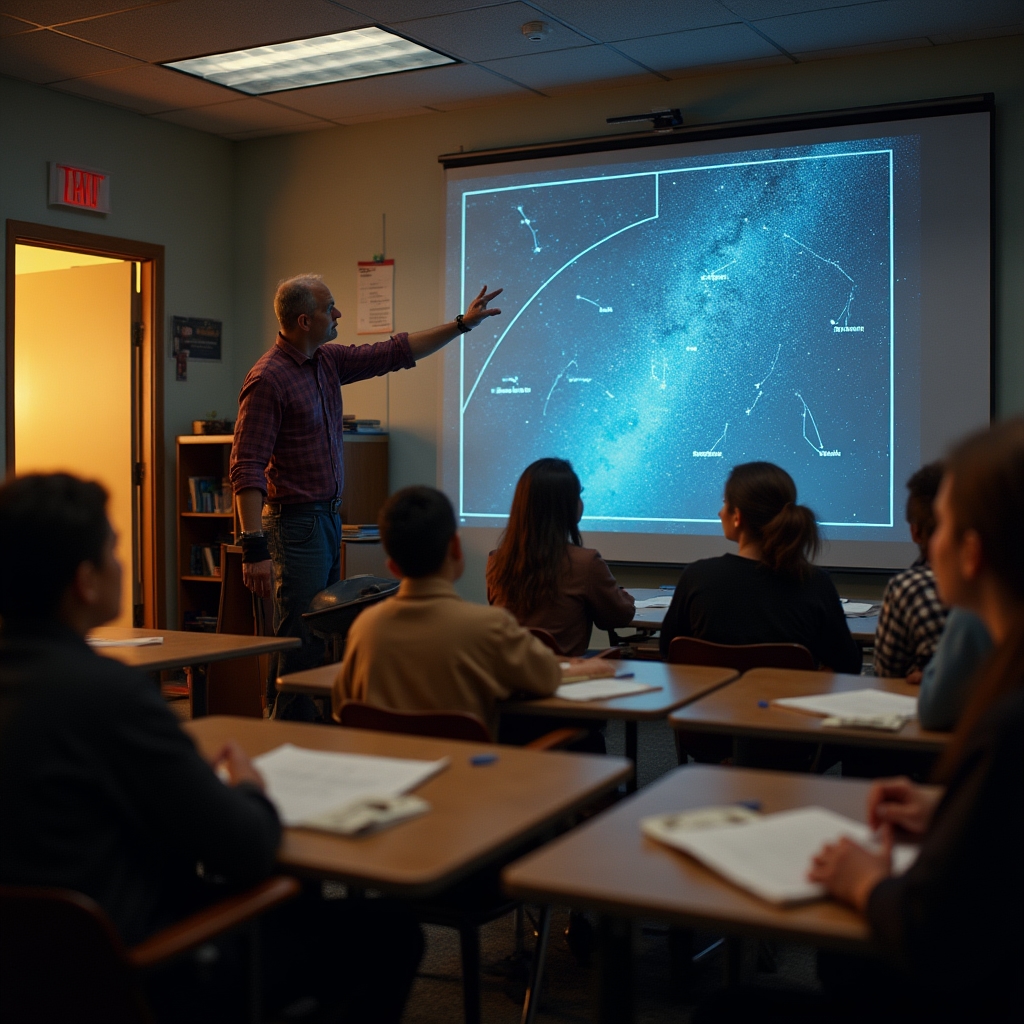
How the content is developed
Astronomy has its own vocabulary, from right ascension to magnitude scales, and that vocabulary matters once a learner is ready for it. Introducing every term on day one tends to discourage beginners before they identify a single constellation. Lessons here introduce plain descriptions first, such as "a star that doesn't twinkle is often a planet," and layer in formal terminology gradually as it becomes useful rather than as a requirement to get started.
Sessions are also reviewed periodically to keep seasonal star positions, meteor shower dates and general observing guidance reasonably current, since sky conditions and event timing shift from year to year.
Group session formats, skill levels and typical session length are outlined on the next page.